

(4) The Glass Box is a lie. Here's what actually works.

I love this story of reimagining civic infrastructure. I sent it to the OSlist when I read this:
We’re running it BarCamp style. Open source. The people in the room build the agenda.
And we are walking the walk.
Sure sounds like they’re opening space to me!!
Peggy
The Glass Box is a lie. Here's what actually works.
See how Kofi, Williamz, Karen and Tom are building Social Capital—and why we're bringing operators, activists, and makers together on Feb 24th.
Bernie J Mitchell https://substack.com/@berniejmitchell
https://substackcdn.com/image/fetch/$s_!pgUA!,f_auto,q_auto:good,fl_progressive:steep/https%3A%2F%2Fsubstack-post-media.s3.amazonaws.com%2Fpublic%2Fimages%2F8c630201-af68-498f-a5fc-14ad8f9e517c_3360x1890.heic
Last week, we talked about Michael Korn and the “insurgents” at Blue Garage who didn’t wait for permission to start building. We talked about how sometimes, you have to build the future before anyone else is ready to buy it.
Well, the future is here. And it’s time to move in.
Because for the last decade, we have been sold a different story—a lie.
The “Future of Work” has been marketed to us as a product, some people even trademark the phrase. A sleek, frictionless, high-spec Glass Box.
The story went like this: If you just buy the right furniture, install the right app, and offer enough craft beer, you will “scale.” You will become a unicorn. You will exit.
This is the Consumer Story. It treats people as users. It treats space as a commodity. And it treats community as a feature you can toggle on and off like a subscription.
Naomi Klein would tell us to follow the money. Where does the money go when a freelancer rents a desk in a Glass Box?
It leaves the neighbourhood before the transaction even clears. It goes to a bondholder in New York. It goes to a landlord in an offshore tax haven. Extractive Economics.
The Glass Box extracts value. The air is recycled. The connections are transactional.
And looking at the data from across our network, I think you are tired of it.
What alive actually feels like
I don’t live in London anymore. But whenever I go back and sit with Kofi Oppong at Urban MBA, I’m reminded of what alive actually feels like.
It’s chaotic in the way a kitchen is chaotic during dinner service—noisy, urgent, vital.
Kofi sits with a 17-year-old kid who is disillusioned with school, and a 57-year-old creative who just got made redundant.
He’s teaching them both how to use AI to write a letter to the Council, or to the bank. He’s hacking the bureaucracy that was designed to exclude them. He’s showing them that they have agency.
In that room, “coworking” means a life raft.
It reminds me of Williamz Omope, who runs his Job Clubs in libraries and spaces like Space4.
Williamz doesn’t have an eligibility form. He doesn’t ask to see your passport or your credit score.
He just says, “This is a safe space. Come back as much as you want.”
He measures success by confidence regained, not job placements. He’s building an app based on “Expected Goals” (xG) in football, because he knows that sometimes, just taking the shot is the victory.
This is Civic Infrastructure.
The economics of belonging
When we stop trying to be a “Workspace Operator” and start acting like a “Civic Infrastructure Builder,” the economics change.
Look at Karen Tait at The Residency in Bishop’s Stortford.
When you spend a pound there, it doesn’t vanish. It goes to the local gym next door. It goes to the local caterer. It goes to the independent supplier.
As Karen told me, she’s building a “level playing field”—a place where the money stays to fight another day.
Look at Tom Ball in Bristol.
He’s running a “Pay It Forward” scheme where he gives free hot-desking to people “in the Gap” between jobs.
Why? Because he knows that a connected, supported person is the lifeblood of the city. He knows that if you lose that person to isolation, the whole city gets poorer.
This is Circulation Economics. This is the Industrial Commons.
It’s what Marshall talked about in the 19th century—the “something in the air” that makes a district thrive. It’s not the buildings. It is pure Social Capital.
It’s the trust. It’s the reciprocity. It’s the knowledge that if my boiler breaks at midnight, I can text someone who actually cares.
The insurgents are tired of waiting
For ten years, I’ve been running the London Coworking Assembly. We’ve been the “insurgents” on the fringe, talking about social value and civic infrastructure while the big guys burned billions on “growth at all costs.”
Well, the big guys are still here. In fact, they are getting bigger.
Through mergers, acquisitions, and sheer spending power, the corporate chains are consolidating.
They have the budgets to outspend us. They have the lobbyists to get the government’s ear while we fight for scraps.
But we’re realising something: We can’t fight them alone anymore.
The freelance designer in Ewan Buck’s space in Bromley—who spent four years fighting for the Council to recognise that a coworking space is actually a town square—needs the energy of the Urban MBA student in Hackney.
The tech founder needs the artist. The policymaker needs the maker space.
The next step isn’t “growing the assembly.” The next step is convergence.
It’s what happens when the Coworking Operators (Karen, Tom, Ewan) stop just talking to each other and start building with the Neighbourhood Activists (Williamz, Kofi) and the Local Makers (Michael Korn at Blue Garage).
We stop being separate “sectors.” We become a united front.
Testing the hypothesis at Blue Garage
On February 24th, we’re taking 150 of us—operators, students, makers, policy geeks—and locking ourselves in Blue Garage in Lewisham for a day.
You know the usual events. Panels of consultants who’ve never unclogged a toilet. Keynotes about “the future of work” delivered by people who’ve never had a member crying in the kitchen at lunch.
We’re running it BarCamp style. Open source. The people in the room build the agenda.
And we are walking the walk.
The event is being staffed and run by Urban MBA. Blaze and the current cohort will be running the entire day—staffing, logistics, all of it. It’s part of their curriculum. They’re the next generation of community builders.
The food? It’s coming from Simone, a thriving food entrepreneur in the Urban MBA programme. Real food. Local food. The food tastes like love, not plastic.
We’re not just saying we should build community infrastructure—we’re doing it in how we run the day.
And this isn’t a one-off.
We’re building a movable community that shows up, quarter after quarter, in different neighbourhoods. We are going to prove that “small and connected” beats “big and extracted” every single time.
Tickets are already moving. I’d love to see you there.
If you’ve been reading these notes and wondering, “Okay Bernie, I get the theory, but what do we DO?”... this is it.
We stop waiting for the cavalry. We build the infrastructure ourselves.
RSVP for 24th Feb @ Blue Garage. https://luma.com/LCAforumFeb26
Deep Dive from the Archives
If this struck a chord, here is where we’ve explored these ideas before:
Build It Before They’re Buying https://berniejmitchell.substack.com/p/dcb4e8e7-fecb-4d5f-abfc-a27d38ae700e – The story of Michael Korn, David Bowie, and why places like Blue Garage matter.
The Antidote to Alienation Is Participation https://berniejmitchell.substack.com/p/5f0197b7-661d-4582-8e37-887cc027cfc5 – Why we need to stop consuming community and start building it.
Bernie’s Picks
🎬 Watch: ACTionism @ Dragon https://www.google.com/url?q=https%3A%2F%2Fwww.instagram.com%2Fp%2FDT00L_Lieqm%2F. This is what it looks like when the neighbourhood actually owns the space. 2 minutes of pure energy.
🎧 Listen: The Williamz Omope Episode https://www.google.com/url?q=https%3A%2F%2Fcoworkingvaluespodcast.substack.com%2Fp%2Ffrom-haircuts-to-health-checks-how%3Futm_source%3Dpublication-search on the Coworking Values Podcast. When he talks about “journey-based success” vs “job outcomes,” it changes how you see your own career.
📺 Watch: ‘Your Workspace Is Under Attack’ https://www.google.com/url?q=https%3A%2F%2Fwww.linkedin.com%2Fposts%2Fberniejmitchell_coworking-communityisthekey-coworkinglondon-activity-7406289549452083200-eErD%3Futm_source%3Dshare%26utm_medium%3Dmember_desktop%26rcm%3DACoAAAF8VlIBOlHiOyMYD8sgvsdQKH6ZNindd1Q — The full breakdown of what the VOA is doing and why.
📋 Action: Email your MP Toolkit https://drive.google.com/file/d/1V26jEVfhlR7pzlGj9Ir9ExC3Dv-aV3H_/view?usp=sharing from FlexSA. Everything you need to contact your MP, including template letters (free, direct-download).
The Monday Domino
Stop trying to fix the whole system today. Just look at your supply chain.
Pick one thing you buy for your space this week—coffee, printing, soap. Can you buy it from someone in your postcode? Can you buy it from a human?
Shift that one transaction. That’s how we start.
Thank you for your time and attention today
Bernie 💚🍉
p.s. 🅿️ Get your ticket for 24th February https://luma.com/LCAforumFeb26
Peggy Holman
peggy@peggyholman.com
Bellevue, WA 98006
206-948-0432
www.peggyholman.com
Enjoy the award winning Engaging Emergence: Turning Upheaval into Opportunity https://peggyholman.com/papers/engaging-emergence/
"An angel told me that the only way to step into the fire and not get burnt, is to become
the fire".
-- Drew Dellinger

Indeed and to me it's odd this writer describing it doesn't reference open
space (she probably only has encountered the format under the Unconference
naming, which does have a certain clarity).
https://morethandigital.info/en/barcamp-what-is-it-actually-and-what-is-the-point/
Brian Burt
On Mon, Feb 2, 2026, 9:07 AM Peggy Holman via OSList everyone@oslist.org
wrote:
I love this story of reimagining civic infrastructure. I sent it to the
OSlist when I read this:
We’re running it BarCamp style. Open source. The people in the room build
the agenda.
And we are walking the walk.
Sure sounds like they’re opening space to me!!
Peggy
The Glass Box is a lie. Here's what actually works.See how Kofi,
Williamz, Karen and Tom are building Social Capital—and why we're bringing
operators, activists, and makers together on Feb 24th.
Bernie J Mitchell https://substack.com/@berniejmitchell
Last week, we talked about Michael Korn and the “insurgents” at Blue
Garage who didn’t wait for permission to start building. We talked about
how sometimes, you have to build the future before anyone else is ready to
buy it.
Well, the future is here. And it’s time to move in.
Because for the last decade, we have been sold a different story—a lie.
The “Future of Work” has been marketed to us as a product, some people
even trademark the phrase. A sleek, frictionless, high-spec Glass Box.
The story went like this: If you just buy the right furniture, install the
right app, and offer enough craft beer, you will “scale.” You will become a
unicorn. You will exit.
This is the Consumer Story. It treats people as users. It treats space as
a commodity. And it treats community as a feature you can toggle on and off
like a subscription.
Naomi Klein would tell us to follow the money. Where does the money go
when a freelancer rents a desk in a Glass Box?
It leaves the neighbourhood before the transaction even clears. It goes to
a bondholder in New York. It goes to a landlord in an offshore tax haven.
Extractive Economics.
The Glass Box extracts value. The air is recycled. The connections are
transactional.
And looking at the data from across our network, I think you are tired of
it.
What alive actually feels like
I don’t live in London anymore. But whenever I go back and sit with Kofi
Oppong at Urban MBA, I’m reminded of what alive actually feels like.
It’s chaotic in the way a kitchen is chaotic during dinner service—noisy,
urgent, vital.
Kofi sits with a 17-year-old kid who is disillusioned with school, and a
57-year-old creative who just got made redundant.
He’s teaching them both how to use AI to write a letter to the Council, or
to the bank. He’s hacking the bureaucracy that was designed to exclude
them. He’s showing them that they have agency.
In that room, “coworking” means a life raft.
It reminds me of Williamz Omope, who runs his Job Clubs in libraries and
spaces like Space4.
Williamz doesn’t have an eligibility form. He doesn’t ask to see your
passport or your credit score.
He just says, “This is a safe space. Come back as much as you want.”
He measures success by confidence regained, not job placements. He’s
building an app based on “Expected Goals” (xG) in football, because he
knows that sometimes, just taking the shot is the victory.
This is Civic Infrastructure.
The economics of belonging
When we stop trying to be a “Workspace Operator” and start acting like a
“Civic Infrastructure Builder,” the economics change.
Look at Karen Tait at The Residency in Bishop’s Stortford.
When you spend a pound there, it doesn’t vanish. It goes to the local gym
next door. It goes to the local caterer. It goes to the independent
supplier.
As Karen told me, she’s building a “level playing field”—a place where the
money stays to fight another day.
Look at Tom Ball in Bristol.
He’s running a “Pay It Forward” scheme where he gives free hot-desking to
people “in the Gap” between jobs.
Why? Because he knows that a connected, supported person is the lifeblood
of the city. He knows that if you lose that person to isolation, the whole
city gets poorer.
This is Circulation Economics. This is the Industrial Commons.
It’s what Marshall talked about in the 19th century—the “something in the
air” that makes a district thrive. It’s not the buildings. It is pure
Social Capital.
It’s the trust. It’s the reciprocity. It’s the knowledge that if my boiler
breaks at midnight, I can text someone who actually cares.
The insurgents are tired of waiting
For ten years, I’ve been running the London Coworking Assembly. We’ve been
the “insurgents” on the fringe, talking about social value and civic
infrastructure while the big guys burned billions on “growth at all costs.”
Well, the big guys are still here. In fact, they are getting bigger.
Through mergers, acquisitions, and sheer spending power, the corporate
chains are consolidating.
They have the budgets to outspend us. They have the lobbyists to get the
government’s ear while we fight for scraps.
But we’re realising something: We can’t fight them alone anymore.
The freelance designer in Ewan Buck’s space in Bromley—who spent four
years fighting for the Council to recognise that a coworking space is
actually a town square—needs the energy of the Urban MBA student in Hackney.
The tech founder needs the artist. The policymaker needs the maker space.
The next step isn’t “growing the assembly.” The next step is convergence.
It’s what happens when the Coworking Operators (Karen, Tom, Ewan) stop
just talking to each other and start building with the Neighbourhood
Activists (Williamz, Kofi) and the Local Makers (Michael Korn at Blue
Garage).
We stop being separate “sectors.” We become a united front.
Testing the hypothesis at Blue Garage
On February 24th, we’re taking 150 of us—operators, students, makers,
policy geeks—and locking ourselves in Blue Garage in Lewisham for a day.
You know the usual events. Panels of consultants who’ve never unclogged a
toilet. Keynotes about “the future of work” delivered by people who’ve
never had a member crying in the kitchen at lunch.
We’re running it BarCamp style. Open source. The people in the room build
the agenda.
And we are walking the walk.
The event is being staffed and run by Urban MBA. Blaze and the current
cohort will be running the entire day—staffing, logistics, all of it. It’s
part of their curriculum. They’re the next generation of community builders.
The food? It’s coming from Simone, a thriving food entrepreneur in the
Urban MBA programme. Real food. Local food. The food tastes like love, not
plastic.
We’re not just saying we should build community infrastructure—we’re doing
it in how we run the day.
And this isn’t a one-off.
We’re building a movable community that shows up, quarter after quarter,
in different neighbourhoods. We are going to prove that “small and
connected” beats “big and extracted” every single time.
Tickets are already moving. I’d love to see you there.
If you’ve been reading these notes and wondering, “Okay Bernie, I get the
theory, but what do we DO?”... this is it.
We stop waiting for the cavalry. We build the infrastructure ourselves.
RSVP for 24th Feb @ Blue Garage. https://luma.com/LCAforumFeb26
Deep Dive from the Archives
If this struck a chord, here is where we’ve explored these ideas before:
-

*Build It Before They’re Buying
<https://berniejmitchell.substack.com/p/dcb4e8e7-fecb-4d5f-abfc-a27d38ae700e>*
– The story of Michael Korn, David Bowie, and why places like Blue Garage
matter.
-

*The Antidote to Alienation Is Participation
<https://berniejmitchell.substack.com/p/5f0197b7-661d-4582-8e37-887cc027cfc5>*
– Why we need to stop consuming community and start building it.
Bernie’s Picks
🎬 Watch: ACTionism @ Dragon
https://www.google.com/url?q=https%3A%2F%2Fwww.instagram.com%2Fp%2FDT00L_Lieqm%2F.
This is what it looks like when the neighbourhood actually owns the space.
2 minutes of pure energy.
🎧 Listen: The Williamz Omope Episode
https://www.google.com/url?q=https%3A%2F%2Fcoworkingvaluespodcast.substack.com%2Fp%2Ffrom-haircuts-to-health-checks-how%3Futm_source%3Dpublication-search
on the Coworking Values Podcast. When he talks about “journey-based
success” vs “job outcomes,” it changes how you see your own career.
📺 Watch: ‘Your Workspace Is Under Attack’
https://www.google.com/url?q=https%3A%2F%2Fwww.linkedin.com%2Fposts%2Fberniejmitchell_coworking-communityisthekey-coworkinglondon-activity-7406289549452083200-eErD%3Futm_source%3Dshare%26utm_medium%3Dmember_desktop%26rcm%3DACoAAAF8VlIBOlHiOyMYD8sgvsdQKH6ZNindd1Q
— The full breakdown of what the VOA is doing and why.
📋 Action: Email your MP Toolkit
https://drive.google.com/file/d/1V26jEVfhlR7pzlGj9Ir9ExC3Dv-aV3H_/view?usp=sharing
from FlexSA. Everything you need to contact your MP, including template
letters (free, direct-download).
The Monday Domino
Stop trying to fix the whole system today. Just look at your supply chain.
Pick one thing you buy for your space this week—coffee, printing, soap.
Can you buy it from someone in your postcode? Can you buy it from a human?
Shift that one transaction. That’s how we start.
Thank you for your time and attention today**Bernie 💚🍉
p.s. 🅿️ Get your ticket for 24th February
https://luma.com/LCAforumFeb26
Peggy Holman
peggy@peggyholman.com
Bellevue, WA 98006
206-948-0432
www.peggyholman.com
Enjoy the award winning Engaging Emergence: Turning Upheaval
into Opportunity https://peggyholman.com/papers/engaging-emergence/
"An angel told me that the only way to step into the fire and not get
burnt, is to become
the fire".
-- Drew Dellinger
OSList mailing list -- everyone@oslist.org
To unsubscribe send an email to everyone-leave@oslist.org
See the archives here: https://oslist.org/empathy/list/everyone.oslist.org

Many, many folks in my experience refer to Open Space as “Open Source” in my world. These are usually folks who are neither facilitators or tech people and who don;t actually know these two terms, but end up conflating them together. As Father Brian Bainbrdge would say, “it’s all good.”
C
On Feb 2, 2026, at 9:16 AM, Brian Burt via OSList everyone@oslist.org wrote:
Indeed and to me it's odd this writer describing it doesn't reference open space (she probably only has encountered the format under the Unconference naming, which does have a certain clarity).
https://morethandigital.info/en/barcamp-what-is-it-actually-and-what-is-the-point/
Brian Burt
On Mon, Feb 2, 2026, 9:07 AM Peggy Holman via OSList <everyone@oslist.org mailto:everyone@oslist.org> wrote:
I love this story of reimagining civic infrastructure. I sent it to the OSlist when I read this:
We’re running it BarCamp style. Open source. The people in the room build the agenda.
And we are walking the walk.
Sure sounds like they’re opening space to me!!
Peggy
The Glass Box is a lie. Here's what actually works.
See how Kofi, Williamz, Karen and Tom are building Social Capital—and why we're bringing operators, activists, and makers together on Feb 24th.
Bernie J Mitchell https://substack.com/@berniejmitchell
https://substackcdn.com/image/fetch/$s_!pgUA!,f_auto,q_auto:good,fl_progressive:steep/https%3A%2F%2Fsubstack-post-media.s3.amazonaws.com%2Fpublic%2Fimages%2F8c630201-af68-498f-a5fc-14ad8f9e517c_3360x1890.heic
Last week, we talked about Michael Korn and the “insurgents” at Blue Garage who didn’t wait for permission to start building. We talked about how sometimes, you have to build the future before anyone else is ready to buy it.
Well, the future is here. And it’s time to move in.
Because for the last decade, we have been sold a different story—a lie.
The “Future of Work” has been marketed to us as a product, some people even trademark the phrase. A sleek, frictionless, high-spec Glass Box.
The story went like this: If you just buy the right furniture, install the right app, and offer enough craft beer, you will “scale.” You will become a unicorn. You will exit.
This is the Consumer Story. It treats people as users. It treats space as a commodity. And it treats community as a feature you can toggle on and off like a subscription.
Naomi Klein would tell us to follow the money. Where does the money go when a freelancer rents a desk in a Glass Box?
It leaves the neighbourhood before the transaction even clears. It goes to a bondholder in New York. It goes to a landlord in an offshore tax haven. Extractive Economics.
The Glass Box extracts value. The air is recycled. The connections are transactional.
And looking at the data from across our network, I think you are tired of it.
What alive actually feels like
I don’t live in London anymore. But whenever I go back and sit with Kofi Oppong at Urban MBA, I’m reminded of what alive actually feels like.
It’s chaotic in the way a kitchen is chaotic during dinner service—noisy, urgent, vital.
Kofi sits with a 17-year-old kid who is disillusioned with school, and a 57-year-old creative who just got made redundant.
He’s teaching them both how to use AI to write a letter to the Council, or to the bank. He’s hacking the bureaucracy that was designed to exclude them. He’s showing them that they have agency.
In that room, “coworking” means a life raft.
It reminds me of Williamz Omope, who runs his Job Clubs in libraries and spaces like Space4.
Williamz doesn’t have an eligibility form. He doesn’t ask to see your passport or your credit score.
He just says, “This is a safe space. Come back as much as you want.”
He measures success by confidence regained, not job placements. He’s building an app based on “Expected Goals” (xG) in football, because he knows that sometimes, just taking the shot is the victory.
This is Civic Infrastructure.
The economics of belonging
When we stop trying to be a “Workspace Operator” and start acting like a “Civic Infrastructure Builder,” the economics change.
Look at Karen Tait at The Residency in Bishop’s Stortford.
When you spend a pound there, it doesn’t vanish. It goes to the local gym next door. It goes to the local caterer. It goes to the independent supplier.
As Karen told me, she’s building a “level playing field”—a place where the money stays to fight another day.
Look at Tom Ball in Bristol.
He’s running a “Pay It Forward” scheme where he gives free hot-desking to people “in the Gap” between jobs.
Why? Because he knows that a connected, supported person is the lifeblood of the city. He knows that if you lose that person to isolation, the whole city gets poorer.
This is Circulation Economics. This is the Industrial Commons.
It’s what Marshall talked about in the 19th century—the “something in the air” that makes a district thrive. It’s not the buildings. It is pure Social Capital.
It’s the trust. It’s the reciprocity. It’s the knowledge that if my boiler breaks at midnight, I can text someone who actually cares.
The insurgents are tired of waiting
For ten years, I’ve been running the London Coworking Assembly. We’ve been the “insurgents” on the fringe, talking about social value and civic infrastructure while the big guys burned billions on “growth at all costs.”
Well, the big guys are still here. In fact, they are getting bigger.
Through mergers, acquisitions, and sheer spending power, the corporate chains are consolidating.
They have the budgets to outspend us. They have the lobbyists to get the government’s ear while we fight for scraps.
But we’re realising something: We can’t fight them alone anymore.
The freelance designer in Ewan Buck’s space in Bromley—who spent four years fighting for the Council to recognise that a coworking space is actually a town square—needs the energy of the Urban MBA student in Hackney.
The tech founder needs the artist. The policymaker needs the maker space.
The next step isn’t “growing the assembly.” The next step is convergence.
It’s what happens when the Coworking Operators (Karen, Tom, Ewan) stop just talking to each other and start building with the Neighbourhood Activists (Williamz, Kofi) and the Local Makers (Michael Korn at Blue Garage).
We stop being separate “sectors.” We become a united front.
Testing the hypothesis at Blue Garage
On February 24th, we’re taking 150 of us—operators, students, makers, policy geeks—and locking ourselves in Blue Garage in Lewisham for a day.
You know the usual events. Panels of consultants who’ve never unclogged a toilet. Keynotes about “the future of work” delivered by people who’ve never had a member crying in the kitchen at lunch.
We’re running it BarCamp style. Open source. The people in the room build the agenda.
And we are walking the walk.
The event is being staffed and run by Urban MBA. Blaze and the current cohort will be running the entire day—staffing, logistics, all of it. It’s part of their curriculum. They’re the next generation of community builders.
The food? It’s coming from Simone, a thriving food entrepreneur in the Urban MBA programme. Real food. Local food. The food tastes like love, not plastic.
We’re not just saying we should build community infrastructure—we’re doing it in how we run the day.
And this isn’t a one-off.
We’re building a movable community that shows up, quarter after quarter, in different neighbourhoods. We are going to prove that “small and connected” beats “big and extracted” every single time.
Tickets are already moving. I’d love to see you there.
If you’ve been reading these notes and wondering, “Okay Bernie, I get the theory, but what do we DO?”... this is it.
We stop waiting for the cavalry. We build the infrastructure ourselves.
RSVP for 24th Feb @ Blue Garage. https://luma.com/LCAforumFeb26
Deep Dive from the Archives
If this struck a chord, here is where we’ve explored these ideas before:
Build It Before They’re Buying https://berniejmitchell.substack.com/p/dcb4e8e7-fecb-4d5f-abfc-a27d38ae700e – The story of Michael Korn, David Bowie, and why places like Blue Garage matter.
The Antidote to Alienation Is Participation https://berniejmitchell.substack.com/p/5f0197b7-661d-4582-8e37-887cc027cfc5 – Why we need to stop consuming community and start building it.
Bernie’s Picks
🎬 Watch: ACTionism @ Dragon https://www.google.com/url?q=https%3A%2F%2Fwww.instagram.com%2Fp%2FDT00L_Lieqm%2F. This is what it looks like when the neighbourhood actually owns the space. 2 minutes of pure energy.
🎧 Listen: The Williamz Omope Episode https://www.google.com/url?q=https%3A%2F%2Fcoworkingvaluespodcast.substack.com%2Fp%2Ffrom-haircuts-to-health-checks-how%3Futm_source%3Dpublication-search on the Coworking Values Podcast. When he talks about “journey-based success” vs “job outcomes,” it changes how you see your own career.
📺 Watch: ‘Your Workspace Is Under Attack’ https://www.google.com/url?q=https%3A%2F%2Fwww.linkedin.com%2Fposts%2Fberniejmitchell_coworking-communityisthekey-coworkinglondon-activity-7406289549452083200-eErD%3Futm_source%3Dshare%26utm_medium%3Dmember_desktop%26rcm%3DACoAAAF8VlIBOlHiOyMYD8sgvsdQKH6ZNindd1Q — The full breakdown of what the VOA is doing and why.
📋 Action: Email your MP Toolkit https://drive.google.com/file/d/1V26jEVfhlR7pzlGj9Ir9ExC3Dv-aV3H_/view?usp=sharing from FlexSA. Everything you need to contact your MP, including template letters (free, direct-download).
The Monday Domino
Stop trying to fix the whole system today. Just look at your supply chain.
Pick one thing you buy for your space this week—coffee, printing, soap. Can you buy it from someone in your postcode? Can you buy it from a human?
Shift that one transaction. That’s how we start.
Thank you for your time and attention today
Bernie 💚🍉
p.s. 🅿️ Get your ticket for 24th February https://luma.com/LCAforumFeb26
Peggy Holman
peggy@peggyholman.com mailto:peggy@peggyholman.com
Bellevue, WA 98006
206-948-0432
www.peggyholman.com http://www.peggyholman.com/
Enjoy the award winning Engaging Emergence: Turning Upheaval into Opportunity https://peggyholman.com/papers/engaging-emergence/
"An angel told me that the only way to step into the fire and not get burnt, is to become
the fire".
-- Drew Dellinger
OSList mailing list -- everyone@oslist.org mailto:everyone@oslist.org
To unsubscribe send an email to everyone-leave@oslist.org mailto:everyone-leave@oslist.org
See the archives here: https://oslist.org/empathy/list/everyone.oslist.org
OSList mailing list -- everyone@oslist.org mailto:everyone@oslist.org
To unsubscribe send an email to everyone-leave@oslist.org mailto:everyone-leave@oslist.org
See the archives here: https://oslist.org/empathy/list/everyone.oslist.org

I have attended many Bar Camp style un-conferences and, of course, many Open Space gatherings of various names. Both happen in tech circles. Both have the elements of self-organizing. Bar Camps sometimes (though not always) borrow some or all of the OST principles and law.
The main way they differ is how the session proposals make it onto the marketplace or agenda wall. At Bar Camps, organizers often have a dominant role in deciding which session proposals will happen at which timeblocks and whether similar sounding (to them) sessions will be combined, or whether some sessions will not make it onto the wall at all, etc. Occasionally there is voting involved. As an attendee (and facilitator) I prefer OST for including all the proposed sessions and respectfully leaving these decisions in the hands of the proposers.
The freedoms of OST make some folks anxious…and Bar Camps have been the result. Clearly more control is better. (Tongue firmly in cheek.) Still, the elements they do include are on the path to self-organizing and self-governing, so I celebrate the baby steps, when they keep people stepping on the path. ;)
Diana
Diana Larsen
dianalarsen.com https://dianalarsen.com/
Quote of the Day: “'What day is it?’ 'It’s today,’ squeaked Piglet. 'My favorite day,' said Pooh.” A. A. Milne
On Feb 2, 2026, at 9:16 AM, Brian Burt via OSList everyone@oslist.org wrote:
Indeed and to me it's odd this writer describing it doesn't reference open space (she probably only has encountered the format under the Unconference naming, which does have a certain clarity).
https://morethandigital.info/en/barcamp-what-is-it-actually-and-what-is-the-point/
Brian Burt
On Mon, Feb 2, 2026, 9:07 AM Peggy Holman via OSList <everyone@oslist.org mailto:everyone@oslist.org> wrote:
I love this story of reimagining civic infrastructure. I sent it to the OSlist when I read this:
We’re running it BarCamp style. Open source. The people in the room build the agenda.
And we are walking the walk.
Sure sounds like they’re opening space to me!!
Peggy
The Glass Box is a lie. Here's what actually works.
See how Kofi, Williamz, Karen and Tom are building Social Capital—and why we're bringing operators, activists, and makers together on Feb 24th.
Bernie J Mitchell https://substack.com/@berniejmitchell
https://substackcdn.com/image/fetch/$s_!pgUA!,f_auto,q_auto:good,fl_progressive:steep/https%3A%2F%2Fsubstack-post-media.s3.amazonaws.com%2Fpublic%2Fimages%2F8c630201-af68-498f-a5fc-14ad8f9e517c_3360x1890.heic
Last week, we talked about Michael Korn and the “insurgents” at Blue Garage who didn’t wait for permission to start building. We talked about how sometimes, you have to build the future before anyone else is ready to buy it.
Well, the future is here. And it’s time to move in.
Because for the last decade, we have been sold a different story—a lie.
The “Future of Work” has been marketed to us as a product, some people even trademark the phrase. A sleek, frictionless, high-spec Glass Box.
The story went like this: If you just buy the right furniture, install the right app, and offer enough craft beer, you will “scale.” You will become a unicorn. You will exit.
This is the Consumer Story. It treats people as users. It treats space as a commodity. And it treats community as a feature you can toggle on and off like a subscription.
Naomi Klein would tell us to follow the money. Where does the money go when a freelancer rents a desk in a Glass Box?
It leaves the neighbourhood before the transaction even clears. It goes to a bondholder in New York. It goes to a landlord in an offshore tax haven. Extractive Economics.
The Glass Box extracts value. The air is recycled. The connections are transactional.
And looking at the data from across our network, I think you are tired of it.
What alive actually feels like
I don’t live in London anymore. But whenever I go back and sit with Kofi Oppong at Urban MBA, I’m reminded of what alive actually feels like.
It’s chaotic in the way a kitchen is chaotic during dinner service—noisy, urgent, vital.
Kofi sits with a 17-year-old kid who is disillusioned with school, and a 57-year-old creative who just got made redundant.
He’s teaching them both how to use AI to write a letter to the Council, or to the bank. He’s hacking the bureaucracy that was designed to exclude them. He’s showing them that they have agency.
In that room, “coworking” means a life raft.
It reminds me of Williamz Omope, who runs his Job Clubs in libraries and spaces like Space4.
Williamz doesn’t have an eligibility form. He doesn’t ask to see your passport or your credit score.
He just says, “This is a safe space. Come back as much as you want.”
He measures success by confidence regained, not job placements. He’s building an app based on “Expected Goals” (xG) in football, because he knows that sometimes, just taking the shot is the victory.
This is Civic Infrastructure.
The economics of belonging
When we stop trying to be a “Workspace Operator” and start acting like a “Civic Infrastructure Builder,” the economics change.
Look at Karen Tait at The Residency in Bishop’s Stortford.
When you spend a pound there, it doesn’t vanish. It goes to the local gym next door. It goes to the local caterer. It goes to the independent supplier.
As Karen told me, she’s building a “level playing field”—a place where the money stays to fight another day.
Look at Tom Ball in Bristol.
He’s running a “Pay It Forward” scheme where he gives free hot-desking to people “in the Gap” between jobs.
Why? Because he knows that a connected, supported person is the lifeblood of the city. He knows that if you lose that person to isolation, the whole city gets poorer.
This is Circulation Economics. This is the Industrial Commons.
It’s what Marshall talked about in the 19th century—the “something in the air” that makes a district thrive. It’s not the buildings. It is pure Social Capital.
It’s the trust. It’s the reciprocity. It’s the knowledge that if my boiler breaks at midnight, I can text someone who actually cares.
The insurgents are tired of waiting
For ten years, I’ve been running the London Coworking Assembly. We’ve been the “insurgents” on the fringe, talking about social value and civic infrastructure while the big guys burned billions on “growth at all costs.”
Well, the big guys are still here. In fact, they are getting bigger.
Through mergers, acquisitions, and sheer spending power, the corporate chains are consolidating.
They have the budgets to outspend us. They have the lobbyists to get the government’s ear while we fight for scraps.
But we’re realising something: We can’t fight them alone anymore.
The freelance designer in Ewan Buck’s space in Bromley—who spent four years fighting for the Council to recognise that a coworking space is actually a town square—needs the energy of the Urban MBA student in Hackney.
The tech founder needs the artist. The policymaker needs the maker space.
The next step isn’t “growing the assembly.” The next step is convergence.
It’s what happens when the Coworking Operators (Karen, Tom, Ewan) stop just talking to each other and start building with the Neighbourhood Activists (Williamz, Kofi) and the Local Makers (Michael Korn at Blue Garage).
We stop being separate “sectors.” We become a united front.
Testing the hypothesis at Blue Garage
On February 24th, we’re taking 150 of us—operators, students, makers, policy geeks—and locking ourselves in Blue Garage in Lewisham for a day.
You know the usual events. Panels of consultants who’ve never unclogged a toilet. Keynotes about “the future of work” delivered by people who’ve never had a member crying in the kitchen at lunch.
We’re running it BarCamp style. Open source. The people in the room build the agenda.
And we are walking the walk.
The event is being staffed and run by Urban MBA. Blaze and the current cohort will be running the entire day—staffing, logistics, all of it. It’s part of their curriculum. They’re the next generation of community builders.
The food? It’s coming from Simone, a thriving food entrepreneur in the Urban MBA programme. Real food. Local food. The food tastes like love, not plastic.
We’re not just saying we should build community infrastructure—we’re doing it in how we run the day.
And this isn’t a one-off.
We’re building a movable community that shows up, quarter after quarter, in different neighbourhoods. We are going to prove that “small and connected” beats “big and extracted” every single time.
Tickets are already moving. I’d love to see you there.
If you’ve been reading these notes and wondering, “Okay Bernie, I get the theory, but what do we DO?”... this is it.
We stop waiting for the cavalry. We build the infrastructure ourselves.
RSVP for 24th Feb @ Blue Garage. https://luma.com/LCAforumFeb26
Deep Dive from the Archives
If this struck a chord, here is where we’ve explored these ideas before:
Build It Before They’re Buying https://berniejmitchell.substack.com/p/dcb4e8e7-fecb-4d5f-abfc-a27d38ae700e – The story of Michael Korn, David Bowie, and why places like Blue Garage matter.
The Antidote to Alienation Is Participation https://berniejmitchell.substack.com/p/5f0197b7-661d-4582-8e37-887cc027cfc5 – Why we need to stop consuming community and start building it.
Bernie’s Picks
🎬 Watch: ACTionism @ Dragon https://www.google.com/url?q=https%3A%2F%2Fwww.instagram.com%2Fp%2FDT00L_Lieqm%2F. This is what it looks like when the neighbourhood actually owns the space. 2 minutes of pure energy.
🎧 Listen: The Williamz Omope Episode https://www.google.com/url?q=https%3A%2F%2Fcoworkingvaluespodcast.substack.com%2Fp%2Ffrom-haircuts-to-health-checks-how%3Futm_source%3Dpublication-search on the Coworking Values Podcast. When he talks about “journey-based success” vs “job outcomes,” it changes how you see your own career.
📺 Watch: ‘Your Workspace Is Under Attack’ https://www.google.com/url?q=https%3A%2F%2Fwww.linkedin.com%2Fposts%2Fberniejmitchell_coworking-communityisthekey-coworkinglondon-activity-7406289549452083200-eErD%3Futm_source%3Dshare%26utm_medium%3Dmember_desktop%26rcm%3DACoAAAF8VlIBOlHiOyMYD8sgvsdQKH6ZNindd1Q — The full breakdown of what the VOA is doing and why.
📋 Action: Email your MP Toolkit https://drive.google.com/file/d/1V26jEVfhlR7pzlGj9Ir9ExC3Dv-aV3H_/view?usp=sharing from FlexSA. Everything you need to contact your MP, including template letters (free, direct-download).
The Monday Domino
Stop trying to fix the whole system today. Just look at your supply chain.
Pick one thing you buy for your space this week—coffee, printing, soap. Can you buy it from someone in your postcode? Can you buy it from a human?
Shift that one transaction. That’s how we start.
Thank you for your time and attention today
Bernie 💚🍉
p.s. 🅿️ Get your ticket for 24th February https://luma.com/LCAforumFeb26
Peggy Holman
peggy@peggyholman.com mailto:peggy@peggyholman.com
Bellevue, WA 98006
206-948-0432
www.peggyholman.com http://www.peggyholman.com/
Enjoy the award winning Engaging Emergence: Turning Upheaval into Opportunity https://peggyholman.com/papers/engaging-emergence/
"An angel told me that the only way to step into the fire and not get burnt, is to become
the fire".
-- Drew Dellinger
OSList mailing list -- everyone@oslist.org mailto:everyone@oslist.org
To unsubscribe send an email to everyone-leave@oslist.org mailto:everyone-leave@oslist.org
See the archives here: https://oslist.org/empathy/list/everyone.oslist.org
OSList mailing list -- everyone@oslist.org mailto:everyone@oslist.org
To unsubscribe send an email to everyone-leave@oslist.org mailto:everyone-leave@oslist.org
See the archives here: https://oslist.org/empathy/list/everyone.oslist.org

Hi friends
In my view what is described in this link can be as bad as a bad open space technology meeting
There are so many how:s which make a huge difference in my view. One of them is the circle another one is unlimited space for topics. Yakki for voting on topics !!!
So I’m quite happy it’s not referenced as an open space technology meeting because in my view it’s not, even if it’s certainly better than the usual one way conferences.
Amazing that that’s still the norm in most areas!
Best regards, good night
Thomas Herrmann
Skickat från Outlook för iOShttps://aka.ms/o0ukef
Från: Chris Corrigan via OSList everyone@oslist.org
Skickat: Monday, February 2, 2026 6:36:28 PM
Till: brian.burt@gmail.com brian.burt@gmail.com
Kopia: Open Space Listserv everyone@oslist.org
Ämne: [OSList] Re: (4) The Glass Box is a lie. Here's what actually works.
Many, many folks in my experience refer to Open Space as “Open Source” in my world. These are usually folks who are neither facilitators or tech people and who don;t actually know these two terms, but end up conflating them together. As Father Brian Bainbrdge would say, “it’s all good.”
C
On Feb 2, 2026, at 9:16 AM, Brian Burt via OSList everyone@oslist.org wrote:
Indeed and to me it's odd this writer describing it doesn't reference open space (she probably only has encountered the format under the Unconference naming, which does have a certain clarity).
https://morethandigital.info/en/barcamp-what-is-it-actually-and-what-is-the-point/
Brian Burt
On Mon, Feb 2, 2026, 9:07 AM Peggy Holman via OSList <everyone@oslist.orgmailto:everyone@oslist.org> wrote:
I love this story of reimagining civic infrastructure. I sent it to the OSlist when I read this:
We’re running it BarCamp style. Open source. The people in the room build the agenda.
And we are walking the walk.
Sure sounds like they’re opening space to me!!
Peggy
The Glass Box is a lie. Here's what actually works.
See how Kofi, Williamz, Karen and Tom are building Social Capital—and why we're bringing operators, activists, and makers together on Feb 24th.
Bernie J Mitchellhttps://substack.com/@berniejmitchell
https://substackcdn.com/image/fetch/$s_!pgUA!,f_auto,q_auto:good,fl_progressive:steep/https%3A%2F%2Fsubstack-post-media.s3.amazonaws.com%2Fpublic%2Fimages%2F8c630201-af68-498f-a5fc-14ad8f9e517c_3360x1890.heic
[https://substackcdn.com/image/fetch/$s_!pgUA!,w_1456,c_limit,f_auto,q_auto:good,fl_progressive:steep/https%3A%2F%2Fsubstack-post-media.s3.amazonaws.com%2Fpublic%2Fimages%2F8c630201-af68-498f-a5fc-14ad8f9e517c_3360x1890.heic]
Last week, we talked about Michael Korn and the “insurgents” at Blue Garage who didn’t wait for permission to start building. We talked about how sometimes, you have to build the future before anyone else is ready to buy it.
Well, the future is here. And it’s time to move in.
Because for the last decade, we have been sold a different story—a lie.
The “Future of Work” has been marketed to us as a product, some people even trademark the phrase. A sleek, frictionless, high-spec Glass Box.
The story went like this: If you just buy the right furniture, install the right app, and offer enough craft beer, you will “scale.” You will become a unicorn. You will exit.
This is the Consumer Story. It treats people as users. It treats space as a commodity. And it treats community as a feature you can toggle on and off like a subscription.
Naomi Klein would tell us to follow the money. Where does the money go when a freelancer rents a desk in a Glass Box?
It leaves the neighbourhood before the transaction even clears. It goes to a bondholder in New York. It goes to a landlord in an offshore tax haven. Extractive Economics.
The Glass Box extracts value. The air is recycled. The connections are transactional.
And looking at the data from across our network, I think you are tired of it.
What alive actually feels like
I don’t live in London anymore. But whenever I go back and sit with Kofi Oppong at Urban MBA, I’m reminded of what alive actually feels like.
It’s chaotic in the way a kitchen is chaotic during dinner service—noisy, urgent, vital.
Kofi sits with a 17-year-old kid who is disillusioned with school, and a 57-year-old creative who just got made redundant.
He’s teaching them both how to use AI to write a letter to the Council, or to the bank. He’s hacking the bureaucracy that was designed to exclude them. He’s showing them that they have agency.
In that room, “coworking” means a life raft.
It reminds me of Williamz Omope, who runs his Job Clubs in libraries and spaces like Space4.
Williamz doesn’t have an eligibility form. He doesn’t ask to see your passport or your credit score.
He just says, “This is a safe space. Come back as much as you want.”
He measures success by confidence regained, not job placements. He’s building an app based on “Expected Goals” (xG) in football, because he knows that sometimes, just taking the shot is the victory.
This is Civic Infrastructure.
The economics of belonging
When we stop trying to be a “Workspace Operator” and start acting like a “Civic Infrastructure Builder,” the economics change.
Look at Karen Tait at The Residency in Bishop’s Stortford.
When you spend a pound there, it doesn’t vanish. It goes to the local gym next door. It goes to the local caterer. It goes to the independent supplier.
As Karen told me, she’s building a “level playing field”—a place where the money stays to fight another day.
Look at Tom Ball in Bristol.
He’s running a “Pay It Forward” scheme where he gives free hot-desking to people “in the Gap” between jobs.
Why? Because he knows that a connected, supported person is the lifeblood of the city. He knows that if you lose that person to isolation, the whole city gets poorer.
This is Circulation Economics. This is the Industrial Commons.
It’s what Marshall talked about in the 19th century—the “something in the air” that makes a district thrive. It’s not the buildings. It is pure Social Capital.
It’s the trust. It’s the reciprocity. It’s the knowledge that if my boiler breaks at midnight, I can text someone who actually cares.
The insurgents are tired of waiting
For ten years, I’ve been running the London Coworking Assembly. We’ve been the “insurgents” on the fringe, talking about social value and civic infrastructure while the big guys burned billions on “growth at all costs.”
Well, the big guys are still here. In fact, they are getting bigger.
Through mergers, acquisitions, and sheer spending power, the corporate chains are consolidating.
They have the budgets to outspend us. They have the lobbyists to get the government’s ear while we fight for scraps.
But we’re realising something: We can’t fight them alone anymore.
The freelance designer in Ewan Buck’s space in Bromley—who spent four years fighting for the Council to recognise that a coworking space is actually a town square—needs the energy of the Urban MBA student in Hackney.
The tech founder needs the artist. The policymaker needs the maker space.
The next step isn’t “growing the assembly.” The next step is convergence.
It’s what happens when the Coworking Operators (Karen, Tom, Ewan) stop just talking to each other and start building with the Neighbourhood Activists (Williamz, Kofi) and the Local Makers (Michael Korn at Blue Garage).
We stop being separate “sectors.” We become a united front.
Testing the hypothesis at Blue Garage
On February 24th, we’re taking 150 of us—operators, students, makers, policy geeks—and locking ourselves in Blue Garage in Lewisham for a day.
You know the usual events. Panels of consultants who’ve never unclogged a toilet. Keynotes about “the future of work” delivered by people who’ve never had a member crying in the kitchen at lunch.
We’re running it BarCamp style. Open source. The people in the room build the agenda.
And we are walking the walk.
The event is being staffed and run by Urban MBA. Blaze and the current cohort will be running the entire day—staffing, logistics, all of it. It’s part of their curriculum. They’re the next generation of community builders.
The food? It’s coming from Simone, a thriving food entrepreneur in the Urban MBA programme. Real food. Local food. The food tastes like love, not plastic.
We’re not just saying we should build community infrastructure—we’re doing it in how we run the day.
And this isn’t a one-off.
We’re building a movable community that shows up, quarter after quarter, in different neighbourhoods. We are going to prove that “small and connected” beats “big and extracted” every single time.
Tickets are already moving. I’d love to see you there.
If you’ve been reading these notes and wondering, “Okay Bernie, I get the theory, but what do we DO?”... this is it.
We stop waiting for the cavalry. We build the infrastructure ourselves.
RSVP for 24th Feb @ Blue Garage.https://luma.com/LCAforumFeb26
Deep Dive from the Archives
If this struck a chord, here is where we’ve explored these ideas before:
-
Build It Before They’re Buyinghttps://berniejmitchell.substack.com/p/dcb4e8e7-fecb-4d5f-abfc-a27d38ae700e – The story of Michael Korn, David Bowie, and why places like Blue Garage matter.
-
The Antidote to Alienation Is Participationhttps://berniejmitchell.substack.com/p/5f0197b7-661d-4582-8e37-887cc027cfc5 – Why we need to stop consuming community and start building it.
Bernie’s Picks
🎬 Watch: ACTionism @ Dragonhttps://www.google.com/url?q=https%3A%2F%2Fwww.instagram.com%2Fp%2FDT00L_Lieqm%2F. This is what it looks like when the neighbourhood actually owns the space. 2 minutes of pure energy.
🎧 Listen: The Williamz Omope Episodehttps://www.google.com/url?q=https%3A%2F%2Fcoworkingvaluespodcast.substack.com%2Fp%2Ffrom-haircuts-to-health-checks-how%3Futm_source%3Dpublication-search on the Coworking Values Podcast. When he talks about “journey-based success” vs “job outcomes,” it changes how you see your own career.
📺 Watch: ‘Your Workspace Is Under Attack’https://www.google.com/url?q=https%3A%2F%2Fwww.linkedin.com%2Fposts%2Fberniejmitchell_coworking-communityisthekey-coworkinglondon-activity-7406289549452083200-eErD%3Futm_source%3Dshare%26utm_medium%3Dmember_desktop%26rcm%3DACoAAAF8VlIBOlHiOyMYD8sgvsdQKH6ZNindd1Q — The full breakdown of what the VOA is doing and why.
📋 Action: Email your MP Toolkithttps://drive.google.com/file/d/1V26jEVfhlR7pzlGj9Ir9ExC3Dv-aV3H_/view?usp=sharing from FlexSA. Everything you need to contact your MP, including template letters (free, direct-download).
The Monday Domino
Stop trying to fix the whole system today. Just look at your supply chain.
Pick one thing you buy for your space this week—coffee, printing, soap. Can you buy it from someone in your postcode? Can you buy it from a human?
Shift that one transaction. That’s how we start.
Thank you for your time and attention today
Bernie 💚🍉
p.s. 🅿️ Get your ticket for 24th February https://luma.com/LCAforumFeb26
Peggy Holman
peggy@peggyholman.commailto:peggy@peggyholman.com
Bellevue, WA 98006
206-948-0432
www.peggyholman.comhttp://www.peggyholman.com/
Enjoy the award winning Engaging Emergence: Turning Upheaval into Opportunityhttps://peggyholman.com/papers/engaging-emergence/
"An angel told me that the only way to step into the fire and not get burnt, is to become
the fire".
-- Drew Dellinger
OSList mailing list -- everyone@oslist.orgmailto:everyone@oslist.org
To unsubscribe send an email to everyone-leave@oslist.orgmailto:everyone-leave@oslist.org
See the archives here: https://oslist.org/empathy/list/everyone.oslist.org
OSList mailing list -- everyone@oslist.orgmailto:everyone@oslist.org
To unsubscribe send an email to everyone-leave@oslist.orgmailto:everyone-leave@oslist.org
See the archives here: https://oslist.org/empathy/list/everyone.oslist.org

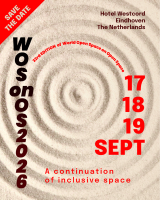
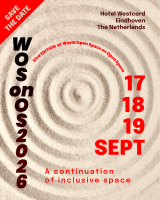
Hello dear people!
The date is set. We work on the website and registration. Coming soon!
Warmly,
Core Team WOSonOS2026_NL
Ineke and Kat
Hooray! Exciting! On my calendar.
Peggy
Peggy Holman
peggy@peggyholman.com
Bellevue, WA 98006
206-948-0432
www.peggyholman.com
Enjoy the award winning Engaging Emergence: Turning Upheaval into Opportunity https://peggyholman.com/papers/engaging-emergence/
"An angel told me that the only way to step into the fire and not get burnt, is to become
the fire".
-- Drew Dellinger
On Feb 17, 2026, at 3:43 AM, Ineke Hurkmans via OSList everyone@oslist.org wrote:
Hello dear people!
The date is set. We work on the website and registration. Coming soon!
Warmly,
Core Team WOSonOS2026_NL
Ineke and Kat
OSList mailing list -- everyone@oslist.org
To unsubscribe send an email to everyone-leave@oslist.org
See the archives here: https://oslist.org/empathy/list/everyone.oslist.org
Wonderfuuul!
Thaaanks
I’ll be there. Hopefully bring some yourth from our democracy initiative.
❤️
Thomas
Skickat från Outlook för iOShttps://aka.ms/o0ukef
Från: Ineke Hurkmans via OSList everyone@oslist.org
Skickat: Tuesday, February 17, 2026 12:43:33 PM
Till: Open Space Listserv everyone@oslist.org
Kopia: Katrien van de Camp katrien.vandecamp@gmail.com
Ämne: [OSList] Save the date WOSonOS 2026
Hello dear people!
The date is set. We work on the website and registration. Coming soon!
Warmly,
Core Team WOSonOS2026_NL
Ineke and Kat
[cid:7ef1b9bb-37dc-45df-9847-be28110067e6@eurprd07.prod.outlook.com]
OSList mailing list -- everyone@oslist.org
To unsubscribe send an email to everyone-leave@oslist.org
See the archives here: https://oslist.org/empathy/list/everyone.oslist.org

Hi Ineke and Kat,
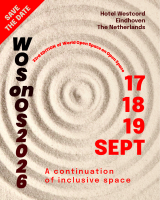
Yes! Beautiful picture. I will be there. Let me know if there is anything I can do, besides inviting the whole world 😊.
Thanks for your efforts, with love,
Tonnie van er Zouwen
info@tonnievanderzouwen.nlmailto:info@tonnievanderzouwen.nl
+31 6 50 697982
Van: Ineke Hurkmans via OSList everyone@oslist.org
Verzonden: dinsdag 17 februari 2026 12:44
Aan: Open Space Listserv everyone@oslist.org
CC: Katrien van de Camp katrien.vandecamp@gmail.com
Onderwerp: [OSList] Save the date WOSonOS 2026
Hello dear people!
The date is set. We work on the website and registration. Coming soon!
Warmly,
Core Team WOSonOS2026_NL
Ineke and Kat
[cid:image001.png@01DCA09C.33B9A8E0]
OSList mailing list -- everyone@oslist.orgmailto:everyone@oslist.org
To unsubscribe send an email to everyone-leave@oslist.orgmailto:everyone-leave@oslist.org
See the archives here: https://oslist.org/empathy/list/everyone.oslist.org


Hi Ineke and all
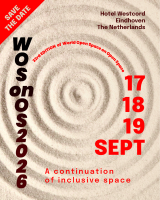
I am there: booked my place, hotel and flights!
See lots of you soon!!
atvb&ss
Jon
Jon Harvey
Leadership & Organisational Development adviser
And author
New book out now! The Mayor's Bear
(available from all good bookshops - HIgh Street and Online)
And have you read my book *'Cracking QUESTIONS' *
... it could just change the way you do business forever ...
jonharveyassociates.co.uk/cracking-questions/
http://www.jonharveyassociates.co.uk/cracking-questions/
Contact details: *jonharveyassociates.co.uk/contact
http://www.jonharveyassociates.co.uk/contact *
he / his
On Tue, 17 Feb 2026 at 11:45, Ineke Hurkmans via OSList everyone@oslist.org
wrote:
Hello dear people!
The date is set. We work on the website and registration. Coming soon!
Warmly,
Core Team WOSonOS2026_NL
Ineke and Kat
OSList mailing list -- everyone@oslist.org
To unsubscribe send an email to everyone-leave@oslist.org
See the archives here: https://oslist.org/empathy/list/everyone.oslist.org